Showing posts with label Neo-Classcal. Show all posts

12 Aug 2013

Krugman Sees the Light

Paul Krugman, Noble Prize winner and influential US economist, has called time on Neoclassical Economics, which might be the turning point in the insane experiment with laissez-faire markets. This seems to me to be a very significant moment in history. The call comes in his New York Times Blog under the title "Synthesis Lost".
"So the neoclassical synthesis — the idea that we can use monetary and fiscal policy to make the world safe for laissez-faire everywhere else — has failed the test." 
"At the very least it means that we need “macroprudential” policies — regulations and taxes designed to limit the risk of crisis — even during good years, because we now know that we can’t count on an effective cleanup when crisis strikes. " [emphasis added]
This is a huge admission of failure on the part of Neoclassical Economics since the Reagan/Thatcher era. The deregulation of finance created a dangerous situation that lead to economic crisis and made it much more difficult to deal with it when it happened.

Having helped to recreat the conditions for the Great Depression one of the mainstream has admitted that it simply lead to disaster all over again, and that the impulse to put controls in place in the post-war years was the right one.

Lest we forget the post-war years were years of steadily growing prosperity and a lack of economic instability, and the contrast with the present could hardly be more stark. The UK started off with massive debts and a lot of damage to repair. And it responded by building: houses, roads, the NHS. And it paid off those debts. There were no recessions from 1945 to 1973. Yes, there were problems, by the end of that period, but they were not because of the controls, but in spite of them.

This opens the door to wider public debate of the alternatives and opens up the possibility of real change in the way we run our economy. This is the first genuinely optimistic news I have read about the economy since I started taking an interest in it a couple of years ago.


Other Responses

Duncan Weldon. Political Economy Trumps Macroeconomics.
"Yesterday Paul Krugman wrote [one] of the most significant blog posts on economics I’ve ever read."
"Essentially Krugman’s (and indeed Kalecki’s) point is this – we have the macroeconomic tools to restart a robust recovery and get unemployment down but these tools are not being used for political reasons." 

Dan Kervick. Escaping from the Friedman Paradigm.
"Aspects of Friedman’s macroeconomics might be in trouble; but Friedman’s broader paradigm for political economy is still, regrettably, too much with us. In fact, Krugman himself doesn’t seem to have moved much outside that paradigm, as I will try to show."
"What Krugman might have pursued further here [but didn't] is that not only have Friedman’s views about central bank policy been proven wrong, but his broader views on the decisive role of monetary aggregates and monetary policy on economic activity are flawed as well." 
"On the whole, [Krugman's] view seems to be that central bank management of macroeconomic affairs is effective except in the unique circumstances of a liquidity trap."
"Krugman...is working within a framework that is based on a natural real equilibrium rate of interest." [Which is to say that he still accepts the idea that aspects of the economy will tend towards an equilibrium value. This central assumption of Neoclassical economics is demonstrably wrong. Complex systems, like national economies or weather, do not tend to equilibrium at all.]
"So, in substantial measure, Krugman embraces the Friedman paradigm prescribing central bank direction of macroeconomic policy, but has sought to repair the flaws in that paradigm with the addition of a few epicycles." 
Matias Vernengo. Krugman on Friedman, Austrians, and Paradise Lost.
The Neoclassical Synthesis, was based on Hicks ISLM and Modigliani's fixed wages. The fundamental idea is that with wage flexibility the system would lead to full employment, a proposition that Keynes denied in the General Theory.

John Quiggin. Krugman, Keynes, Kalecki, Konczal. Crooked Timber.
"Still, this marks a striking shift in macroeconomics, where only five years ago, the leading figures were congratulating themselves on the convergence between saltwater and freshwater schools, under the banner of dynamic stochastic general equilibrium. As I argued in Zombie Economics, it’s precisely the centre ground of convergence that has been rendered most thoroughly untenable by the crisis. Yet that is still where the majority of academic work being published in journals is grounded."

21 Jun 2012

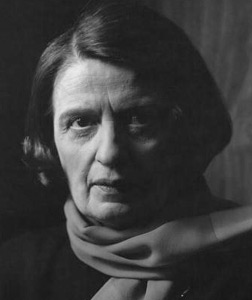
The Baleful Influence of Ayn Rand

In his excellent documentary with the awkward title All Watched Over by Machines of Loving Grace, Adam Curtis included the story of how Alan Greenspan, one of the major figures responsible for the crisis in world finance, fell under the spell of the strange and seductive Russian émigré Ayn Rand. It really is worth watching the documentary. It exists from time to time as pirated videos on YouTube and is shown on TV from time to time.

Rand advocated a "philosophy" which she called "Objectivism". Her work was mainly produced in the form of novels such as The Fountain Head, and Atlas Shrugged. Adam Curtis describes her philosophy.
"Human beings were alone in the universe, they must free themselves of all forms of political and religious control and live their lives guided by their selfish desires. If they did this they would become heroic figures."
In her own words
"If man want to live on earth his highest purpose is the achievement of his own happiness. He must not force other people, not accept their right to force him. Each man must live as an end in himself and follow his own rational self interest."

Rand herself was a charismatic figure who gathered a group of adoring disciples around her. Her ideas and her approach to life see pathological in retrospect. Her philosophy seems bizarre to us now, though she still has followers. This is a time when we see collective altruistic action as beneficial. Inspired by Live Aid we find ways to work together and some of the most significant events in the last few years have been the Arab Spring and the Occupy movement. And rightly so because empathy and altruism are our finest features, and we are social animals who thrive through cooperation. I've showed on my other blog that one literally cannot divorce reason from emotion. We are human beings, not Vulcans. Indeed we all know that his reason is both Mr Spock's strength and his weakness.

Rand was influential. Vastly influential. Many of the entrepreneurs in Silicon Valley had read Atlas Shrugged and saw themselves as Randian Heros. But it is her influence on Alan Greenspan I want to focus on here. Greenspan fell in love with Rand her ideas. He became one of her inner circle, though in the Curtis film other insiders claim that she never liked him. Now there is an irony, because of all her disciples Greenspan was most effective at implementing and spreading her ideas.

Akerlof and Shiller point out in their book that the original ideas of Keynes were watered down to make them more acceptable and that this watered down version was what people took for Keysian theory. Recent Peter Keen has pointed out that economists don't seem to read their own literature. Keynes General Theory was replaced by John R Hick's quantitative interpretation of it. Keynes did not assume that consumers were rational, he assumed that they were capable of irrational behaviour as well. This irrational component was played down, weakening the theory, and this allowed it to be replaced in the 1970's by the Neo-Classical model in which people rationally pursue their own self interest, and that governments should not interfere with people in pursuit of happiness. Sound familiar?

Neo-Classical economics is an extension of Ayn Rand's Objectivism, with Alan Greenspan as one of it's chief prophets. But like Rand herself, and her philosophy is anything but objective. And neither is Neo-Classical economics objective. It treats people and their behaviour in an extremely naive and unrealistic way. And it does not allow for the actual way that people behave which is not always rational.

What it lead to was the financial sector convincing politicians that they ought to be free of any government control and that this would lead to a kind of utopia in which everyone would benefit. As Curtis points out it was partly based on a belief that computers would facilitate a new kind of stability by predicting risk and allowing the financiers to hedge against it.

But we've seen what it has lead to. Multiple financial disasters. And now the world wide collapse of the banking system, at the same time as bankers salaries have grown exponentially. Greedy bankers have pillaged the world economies and got mega-rich doing so, all the while telling us that it is for the best. And it's politicians who have facilitated all this by removing restrictions on the finance sector and becoming Free Market evangelists, thinking that in the process they themselves might become Randian heroes.

Rand has cast a long shadow over the Western World. If we're ever going to get out into the light again, we need to shrug off Rand and her stupid ideas.