Showing posts with label Adam Curtis. Show all posts

17 Jul 2012

The Trap

This film (in three parts) by Adam Curtis from 2007 explores our ideas about the individual and freedom. In part one he explores the role that game theory has played in forming these ideas, particularly the game theory developed by John Nash which sees the human individual as completely alone and totally self-interested. Nash, the subject of a biography and film adaptation called A Beautiful Mind, suffered from paranoid schizophrenia. These theories became the underpinning of USA's Cold War 'balance of terror' nuclear strategy. 

Meanwhile R D Laing was popularising the notion that we cannot trust authorities to act in our interest. The "system" is trying to control our thoughts and suppress our freedom. His main attack was directed against psychiatry which had begun to use behavioural traits to assign diagnosis based on statistical methods. But in studying madness he came to believe that the family played a role as a theatre of power relations in which each member was selfishly trying to manipulate the others. He then generalised this to the idea that authority was being used to control and suppresses individuals, and he became a minor celebrity promoting these views. [Though given the zeitgeist he could well be seen as a product of his time].

At the same time a branch of economics, Neo-classical Economics, based on the thought of Friedrich August Hayek's 'Choice Theory' also viewed the individual as totally self interested, and began to be prominent. The idea of the 'public good' or a sense of 'public duty' began to be discredited. This process was dramatised in the comedy Yes Minister.

Western leaders began to be influenced by these ideas, particularly Margaret Thatcher in the UK [and Ronald Reagan in the USA]. The elements mentioned began to coincide particularly in the 1980s. 

Alain Enthoven had been a prominent proponent of game theory in economics. One of his objective was to replace values and emotions with self interest and rationality. For instance to measure the effectiveness of soldiers in Vietnam he introduced the concept of the body count, which is now seen as contributing to civilian deaths. In 1984 he was brought in by Thatcher to reform the NHS away from traditional values and caring, towards targets and measurable outcomes. He saw this as "challenging the power of organised medicine". In this view doctors do not care for their patients but only compete for personal power and prestige. He has taken the frankly aberrant views of John Nash, mixed with with the counter culture distrust of authority, and turned them into unquestioned truths about human nature. It's a vision of humanity in which altruism plays no part. Ironically the subsequent Labour government pursued similar policies based on similar assumptions.

Adam Curtis is one of the leading critical voices of our age. This film is very worthwhile watching. 


So in the minds of our politicians all of us are isolated, calculating, self obsessed, and completely lacking in empathy and altruism. There is no such thing as the public good or the public interest. Our happiness can best be achieved by encouraging selfish behaviour and allowing it free reign by eliminating the interference of government. This is partly because civil servants only serve their own self-interests.

This idea is flawed at it's roots. But it's roots go even deeper. I've explored this to some extent in my Renegade Economist blog Darwin Distorted or How the West was Won.

21 Jun 2012

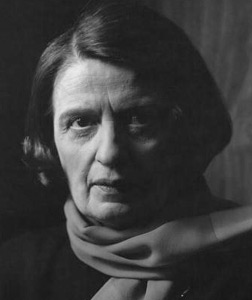
The Baleful Influence of Ayn Rand

In his excellent documentary with the awkward title All Watched Over by Machines of Loving Grace, Adam Curtis included the story of how Alan Greenspan, one of the major figures responsible for the crisis in world finance, fell under the spell of the strange and seductive Russian émigré Ayn Rand. It really is worth watching the documentary. It exists from time to time as pirated videos on YouTube and is shown on TV from time to time.

Rand advocated a "philosophy" which she called "Objectivism". Her work was mainly produced in the form of novels such as The Fountain Head, and Atlas Shrugged. Adam Curtis describes her philosophy.
"Human beings were alone in the universe, they must free themselves of all forms of political and religious control and live their lives guided by their selfish desires. If they did this they would become heroic figures."
In her own words
"If man want to live on earth his highest purpose is the achievement of his own happiness. He must not force other people, not accept their right to force him. Each man must live as an end in himself and follow his own rational self interest."

Rand herself was a charismatic figure who gathered a group of adoring disciples around her. Her ideas and her approach to life see pathological in retrospect. Her philosophy seems bizarre to us now, though she still has followers. This is a time when we see collective altruistic action as beneficial. Inspired by Live Aid we find ways to work together and some of the most significant events in the last few years have been the Arab Spring and the Occupy movement. And rightly so because empathy and altruism are our finest features, and we are social animals who thrive through cooperation. I've showed on my other blog that one literally cannot divorce reason from emotion. We are human beings, not Vulcans. Indeed we all know that his reason is both Mr Spock's strength and his weakness.

Rand was influential. Vastly influential. Many of the entrepreneurs in Silicon Valley had read Atlas Shrugged and saw themselves as Randian Heros. But it is her influence on Alan Greenspan I want to focus on here. Greenspan fell in love with Rand her ideas. He became one of her inner circle, though in the Curtis film other insiders claim that she never liked him. Now there is an irony, because of all her disciples Greenspan was most effective at implementing and spreading her ideas.

Akerlof and Shiller point out in their book that the original ideas of Keynes were watered down to make them more acceptable and that this watered down version was what people took for Keysian theory. Recent Peter Keen has pointed out that economists don't seem to read their own literature. Keynes General Theory was replaced by John R Hick's quantitative interpretation of it. Keynes did not assume that consumers were rational, he assumed that they were capable of irrational behaviour as well. This irrational component was played down, weakening the theory, and this allowed it to be replaced in the 1970's by the Neo-Classical model in which people rationally pursue their own self interest, and that governments should not interfere with people in pursuit of happiness. Sound familiar?

Neo-Classical economics is an extension of Ayn Rand's Objectivism, with Alan Greenspan as one of it's chief prophets. But like Rand herself, and her philosophy is anything but objective. And neither is Neo-Classical economics objective. It treats people and their behaviour in an extremely naive and unrealistic way. And it does not allow for the actual way that people behave which is not always rational.

What it lead to was the financial sector convincing politicians that they ought to be free of any government control and that this would lead to a kind of utopia in which everyone would benefit. As Curtis points out it was partly based on a belief that computers would facilitate a new kind of stability by predicting risk and allowing the financiers to hedge against it.

But we've seen what it has lead to. Multiple financial disasters. And now the world wide collapse of the banking system, at the same time as bankers salaries have grown exponentially. Greedy bankers have pillaged the world economies and got mega-rich doing so, all the while telling us that it is for the best. And it's politicians who have facilitated all this by removing restrictions on the finance sector and becoming Free Market evangelists, thinking that in the process they themselves might become Randian heroes.

Rand has cast a long shadow over the Western World. If we're ever going to get out into the light again, we need to shrug off Rand and her stupid ideas.